
Project Zero
Sailing on a finite amount of energy
Interfaces for voyage planning and energy management on board an emission-free sailing yacht.
Sailing on a finite amount of energy
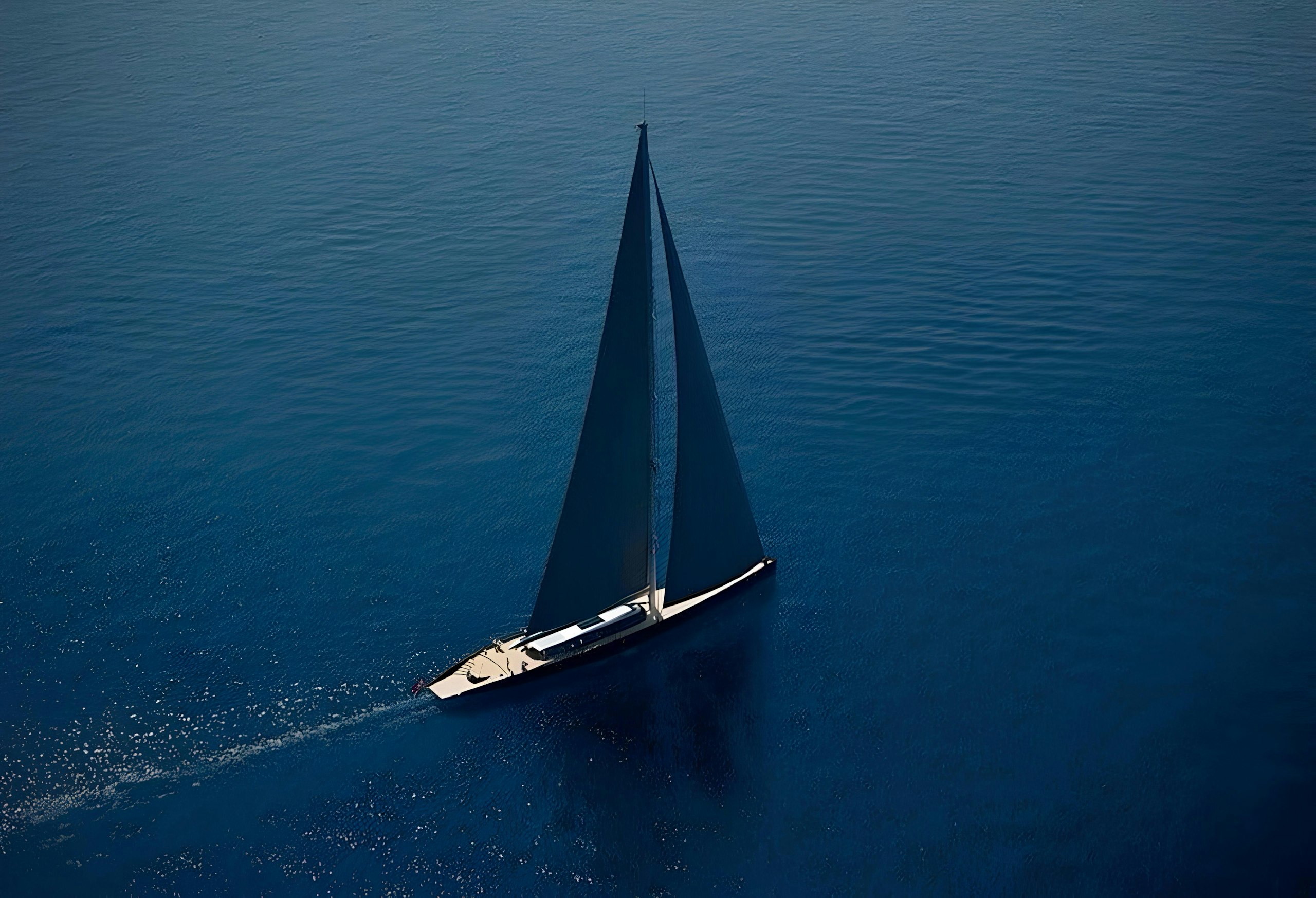
Project Zero is working on Zero, a sailing yacht that sails completely emission-free. The long-term goal: not only to prove that it can be done, but to enable others to build emission-free ships themselves. Sping helped design and build the software on board: from a system captains use to plan voyages to data visualisations that show how energy flows through the system.
A limited energy budget and disconnected systems
Challenge
On a ship running on fuel, almost any voyage is possible, whatever the weather does. On Zero, things are different: there is only a limited amount of energy on board. So a captain needs to know in advance whether a planned route and the guests' programme are feasible within the energy budget. And if they are not, they want to know why and what they can adjust.
At the same time, the systems on board a yacht usually work in isolation. Voyage planning happens through email and documents, while energy data sits in technical screens for engineers. Project Zero wanted one coherent experience for captains, crew, engineers and guests.
From design sprints to a clickable energy demo
Approach
Design sprints with captains and experts
We started with design sprints. We visited a shipyard to see the scale of such a yacht and the workplaces of the captain and engineers. We spoke with captains, engineers and the naval architect, built prototypes and tested them with captains. This showed that voyage planning is the linchpin: it is where all the information the energy system needs for a good prediction comes together.
A voyage planner for captains and guests
Next, working in two-week sprints, we built a system that lets captains plan and share voyages. They plot a route on the map, add waypoints with photos, descriptions and activities, and reuse locations they created before. Guests get their own view with a timeline of their voyage and can share documents. We also interviewed crew members and assistants to understand how schedules and guest information are shared on board.
The design principles were clear: a captain must be able to create and share a voyage in no time. Smart defaults fill in as much as possible, changes are saved instantly and pop-ups are used sparingly. Captains start with the information they have and fill in the rest later.
Making energy visible
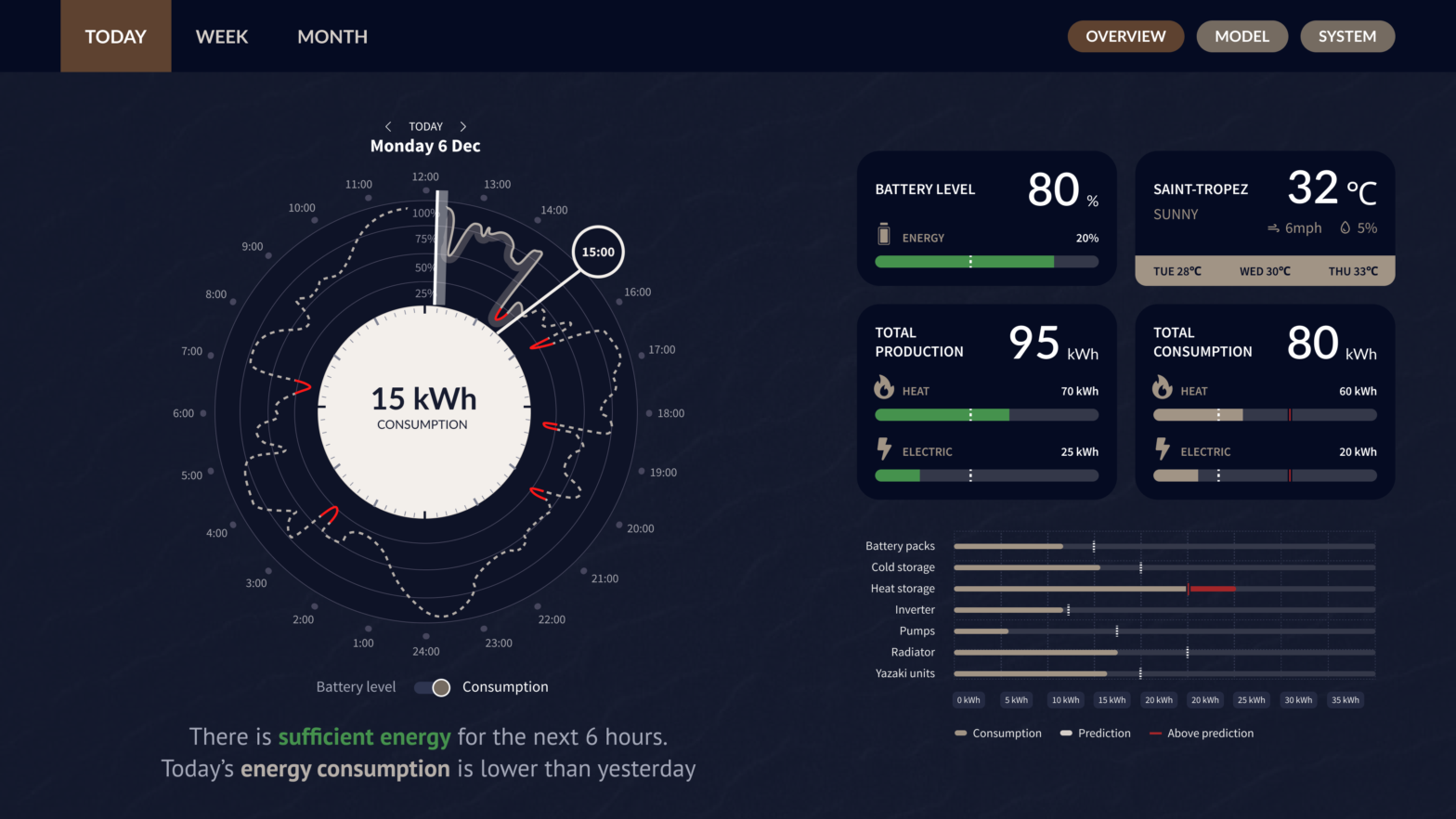
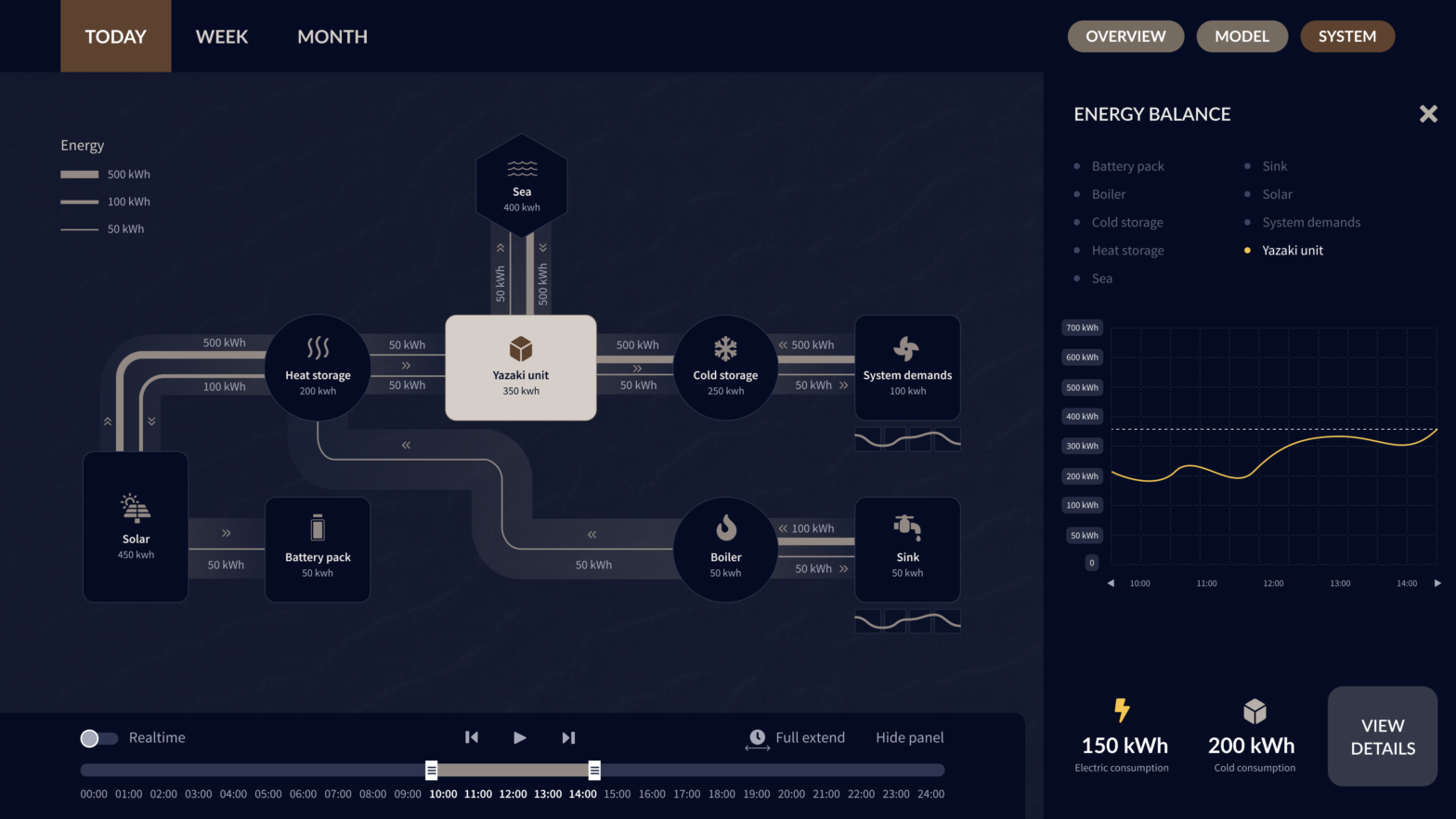
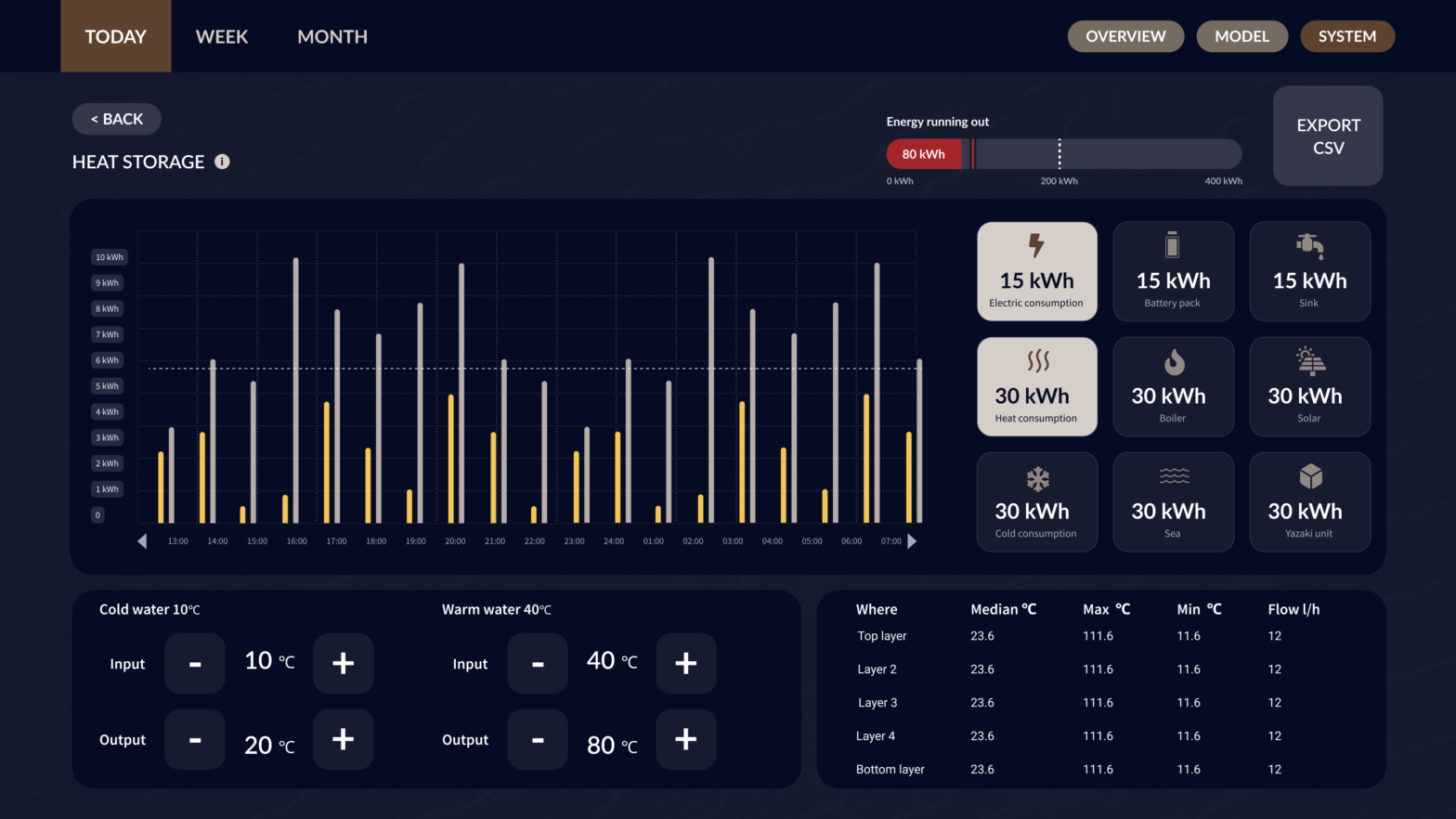
Before the yacht itself sets sail, Project Zero tests the technology in a self-sufficient container. For this we designed data visualisations that show at a glance how much energy is available compared to the prediction and normal consumption. A system diagram shows how energy flows from the sun through heat and cold storage to appliances and installations.
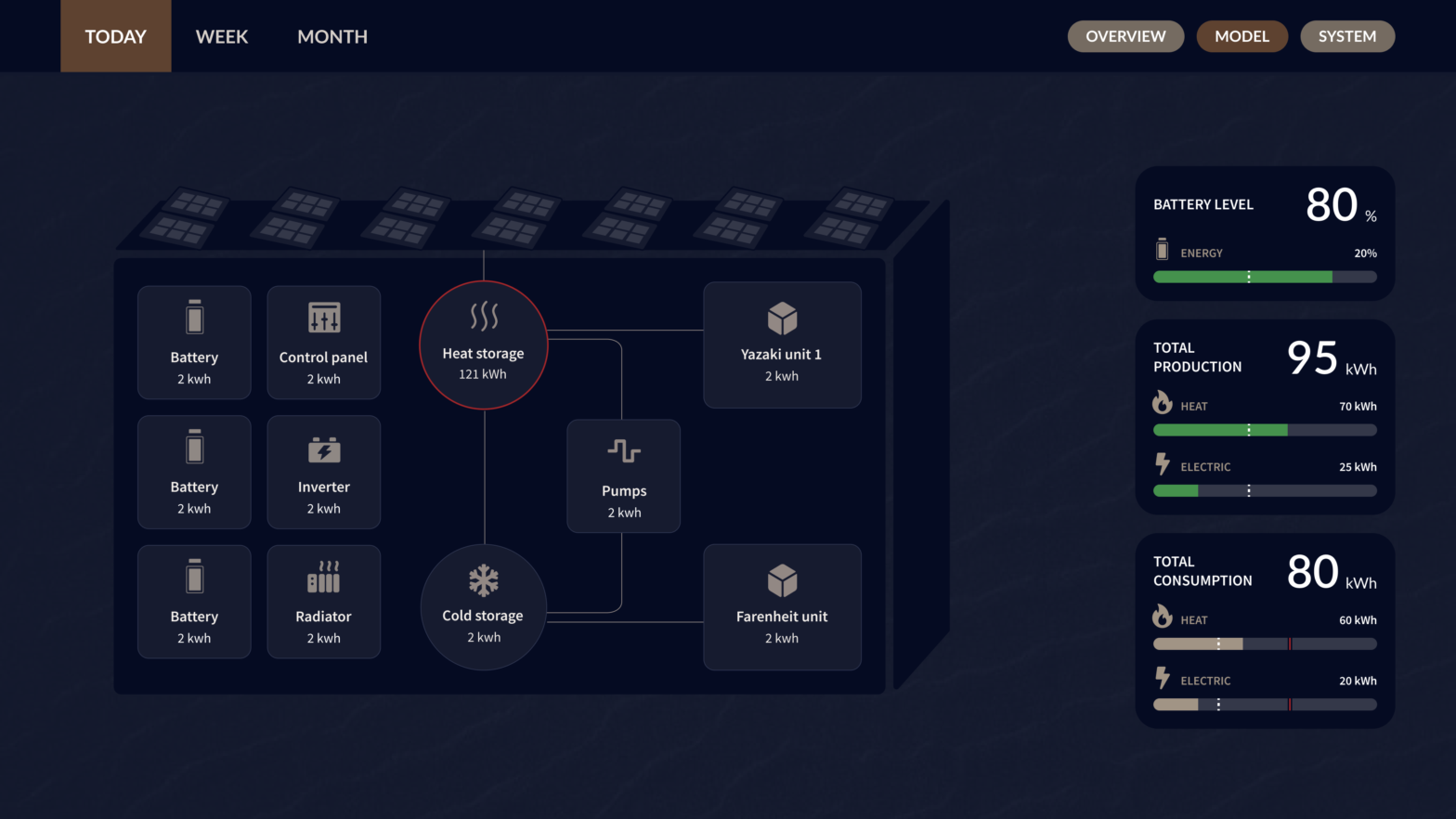
The visualisations are layered: understandable for visitors, with enough detail for engineers. The result was a clickable demo that serves as the foundation for the interfaces on board.
A foundation for energy-based voyages
Result
Captains have a voyage planner that fits the way they work: quickly set up a voyage, share it with guests and adjust it along the way. Guests get an inspiring overview of their voyage, and the crew can see what is planned. The energy visualisations show both engineers and visitors that an energy-neutral system works. Together they lay the foundation for a yacht that plans its voyages around a finite amount of energy.
Expertise and methodology
Expertise: UX research, UX/UI design, data visualisation and a custom web application. Methods: design sprints, interviews and usability tests with captains, field visits, personas and jobs to be done. Technology: Vue with Vuetify (Material Design) and clickable prototypes in Figma. Way of working: Agile/Scrum in two-week sprints, with Project Zero's product owner in the team.